


The pool I help maintain is at my in-laws' place next door, and the first summer it ran, I quietly appointed myself the guy who'd keep it swimmable. I'd swallowed the idea that a saltwater pool is close to maintenance-free, the kind of wishful thinking I thought the habits I had to unlearn for my lawn had already cured me of. It hadn't. The pool charged tuition to teach the lesson again. The mistakes that cost real money were the slow, invisible ones, and the most expensive was a winter close I was sure I'd handled right. Every fix turned out to be free.
I balanced the water once and assumed it would hold
A salt generator pushes pH up on its own
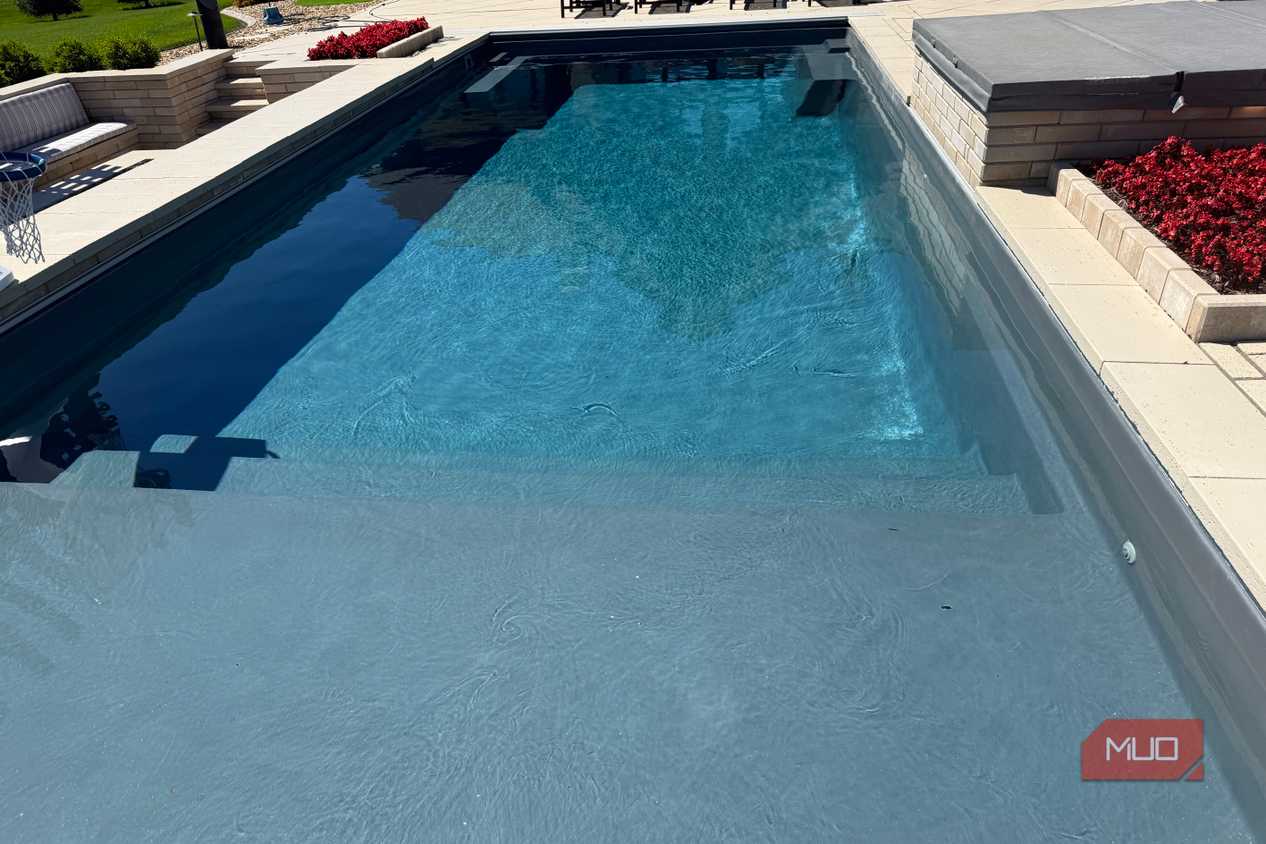


 Credit: Jonathon Jachura / MUO
 Credit: Jonathon Jachura / MUO
 Credit: Jonathon Jachura / MUO
 Credit: Jonathon Jachura / MUO
 Credit: Jonathon Jachura / MUO
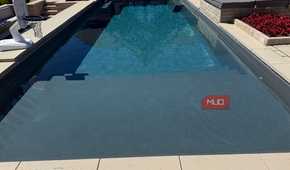
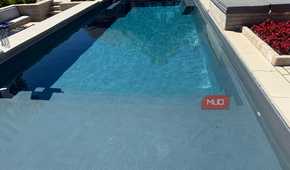
I got everything dialed in at startup and walked away satisfied. That was the mistake. A salt cell makes chlorine by splitting salt in the water, and one byproduct of that process is rising pH. Mine climbed on its own while I wasn't looking. The waterline tile started wearing a chalky scale ring, the water got a little cloudy, and the chlorine the cell produced couldn't keep up, even though the unit was running plenty.
I'd assumed balanced water stayed balanced. It doesn't, not on a saltwater pool. Now I test weekly and add acid in small doses before pH has a chance to drift. The cost of learning this the slow way was a bottle's worth of muriatic acid, an afternoon scrubbing scale off the tile, and a couple of swim weeks I'd rather have spent in the water.
I treated the salt cell as set-and-forget
Scale on the cell plates quietly cuts your chlorine

A salt cell has no moving parts and nothing obvious to wear out, so I assumed it was the one piece of equipment I'd never have to touch. It scales up the same way the tile does. Calcium builds on the metal plates inside, and as that coating thickens, the cell makes less chlorine for the same amount of run time. By midsummer the pool was losing the chlorine fight during the hottest stretch of July, and I couldn't figure out why the numbers kept sliding.
The answer sat inside the housing the whole time, crusted in white. The cell is a consumable part, not a permanent fixture, and replacements run a few hundred dollars. I shortened the life of mine by ignoring it. A quick inspection every few months, plus a soak in mild acid when scale shows up, is all it asks for.
I never paid attention to the filter pressure
A climbing pressure gauge is the filter asking to be cleaned

There's a pressure gauge on the filter, and for most of the first season, I rarely looked at it. Pressure had been creeping upward the whole time. As a filter loads with debris, resistance builds, flow drops, and the water stops getting cleaned, even when the chemistry reads fine. That's the part that confused me.
My test kit said the water was balanced, yet it had some haze to it for weeks. The filter simply wasn't moving enough water to clear it. Once someone pointed at the gauge and explained that a rise of about 8 to 10 psi over the clean baseline means it's time to backwash, the haze solved itself. I'd been chasing a clarity problem with chemicals when the fix was a two-minute backwash and the habit of glancing at a dial.
I left the cover to fend for itself over winter
Water and leaves on the cover become April's swamp

The cover went on in October, and I considered the job done. Through winter, rain, and snowmelt pooled on top of it, leaves piled into that water, and the whole thing turned into a stagnant tray sitting over the pool. I never pumped it off. Then I opened late the next spring, well after the water underneath had warmed.
What I pulled back was a swamp. This is where the Ring floodlight camera that overlooks the pool earns its spot. From my place next door, I can pull up the feed, catch water and debris collecting on the cover, and clear them before they build up too much. That first year cost me weeks of recovery, heavy cell run time, and a chunk of water lost vacuuming the gunk out to waste.
Cutting corners closing the pool
A cracked line in spring is a closing mistake you can't see

I thought I'd closed it correctly. I lowered the water, added the winter chemicals, and pulled the cover over the top. What I almost skipped was clearing the plumbing lines, and I nearly left the salt cell installed instead of pulling it for storage. Northern Indiana winters don't forgive trapped water. It freezes, expands, and goes looking for the weakest point in the system. Thankfully, I caught my mistake before freezing temps arrived.
If I didn’t, the return line fitting could have cracked, and the pool wouldn't hold water. A section of pipe could have split clean open mid-winter. That repair would have dwarfed every other mistake on this list combined. It would hurt. That’s why I always treat closing as the most important job of the season, not the last chore before I ignore the pool for five months.
My second season cost a fraction of my first
None of these mistakes announced themselves. They built up quietly, in scale I couldn't see, and the cost only surfaced later. Catching things sooner is the entire point, which is exactly why a $20 sensor once saved my basement. None of what I changed cost a dime. I just stopped waiting for the pool to tell me something was wrong. It's been easy ever since, and most weeks the only attention it needs is a quick look at the camera.