


Every Ryobi tool in my garage clips onto the same battery rail, a design Ryobi has left alone since 1996. That universal fit is the platform's best trick and its most misleading one. Any pack powers any tool, which makes it easy to assume the packs themselves are interchangeable in ways that matter. Mine aren't. Several arrived free inside kits. One costs more than the tool it powers. Between those extremes sit the battery I'd tell you to walk past and the battery I buy every time it goes on sale. Years of spending on packs instead of tools taught me to sort the shelf by a single number, and it isn't the one printed on the front of the pack.
The compact packs I never actually chose
Free in the box, and priced accordingly




 Credit: Jonathon Jachura / MUO
 Credit: Jonathon Jachura / MUO
 Credit: Chris Hachey / MakeUseOf
 Credit: Jonathon Jachura / MUO
 Credit: Jonathon Jachura / MUO
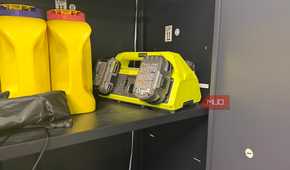
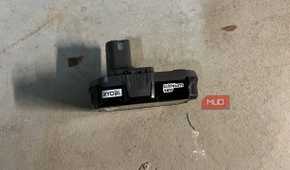
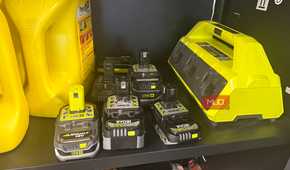
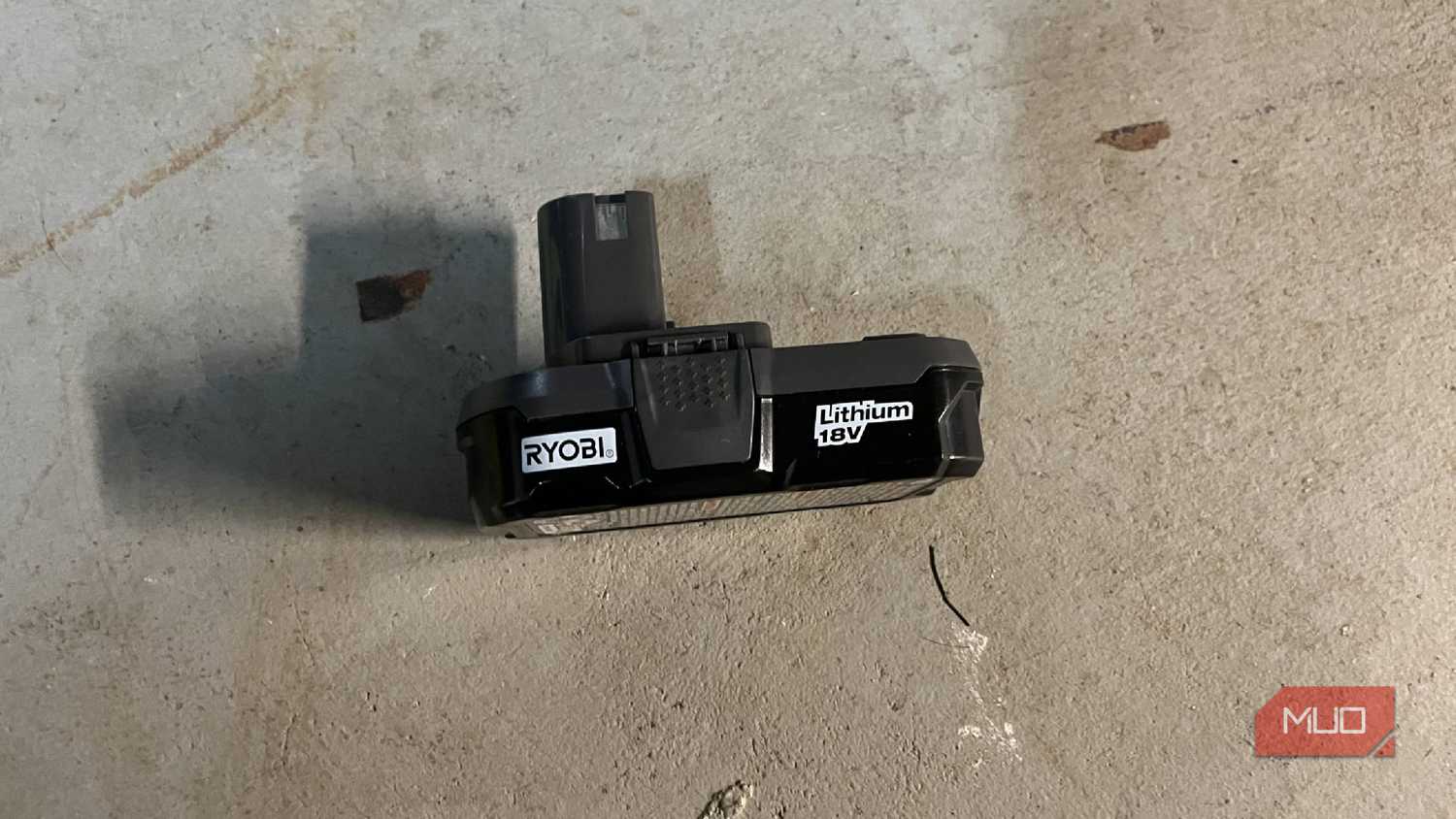
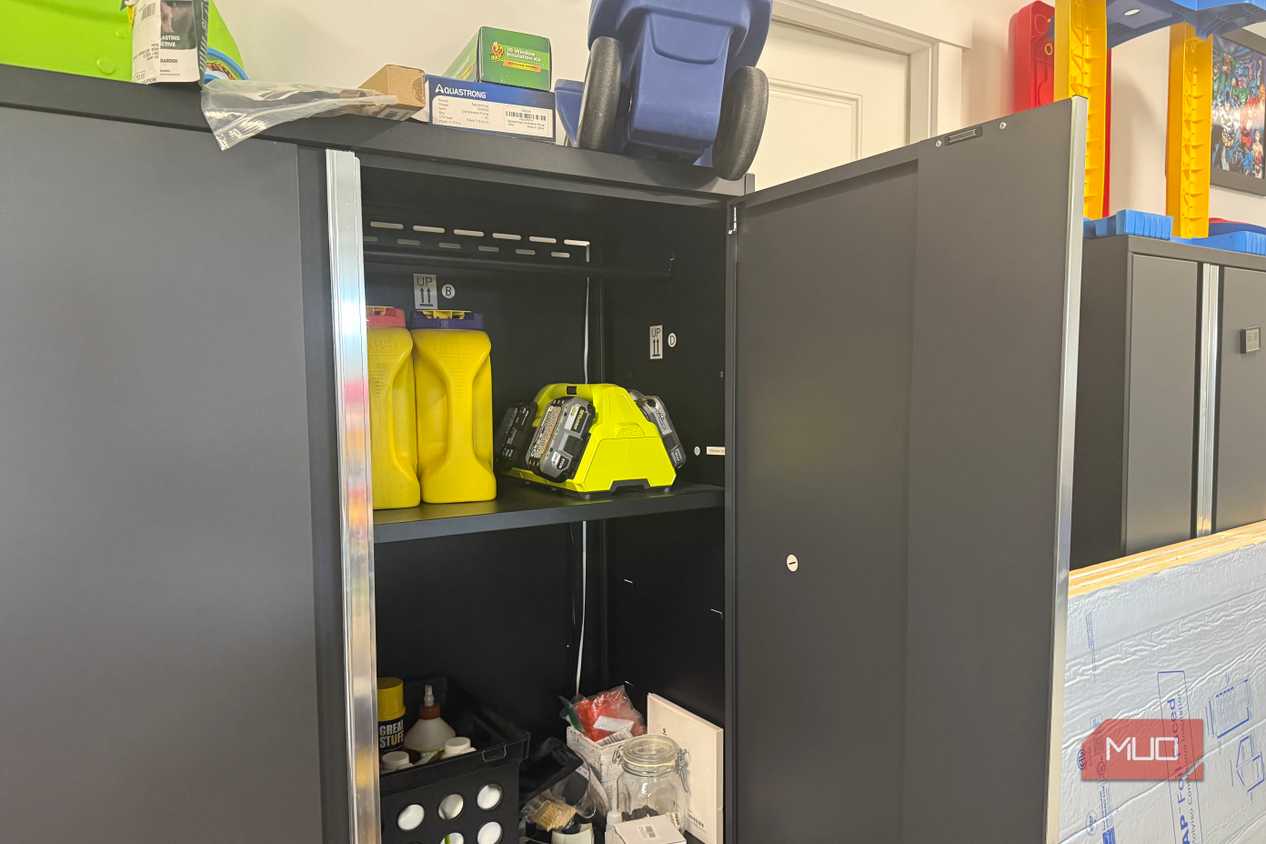
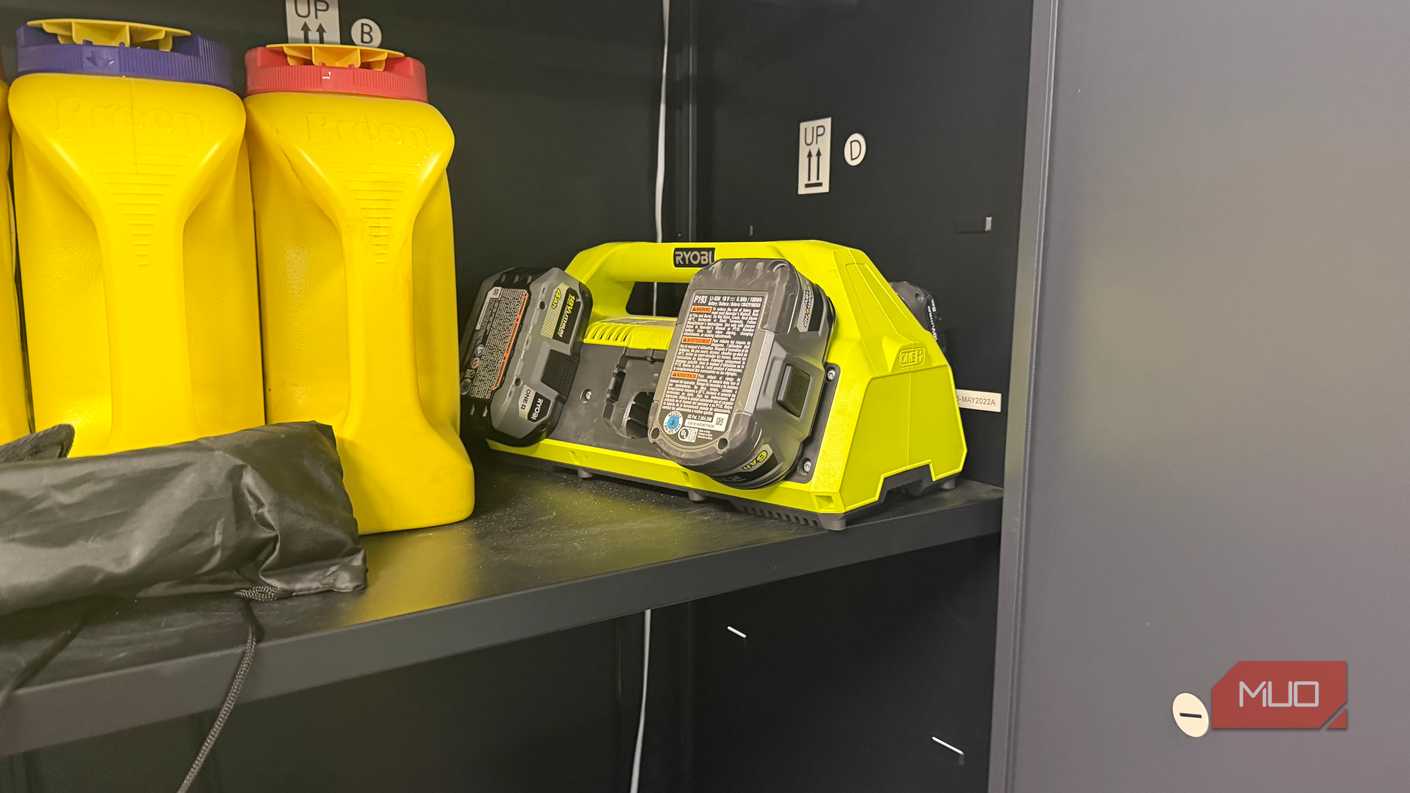
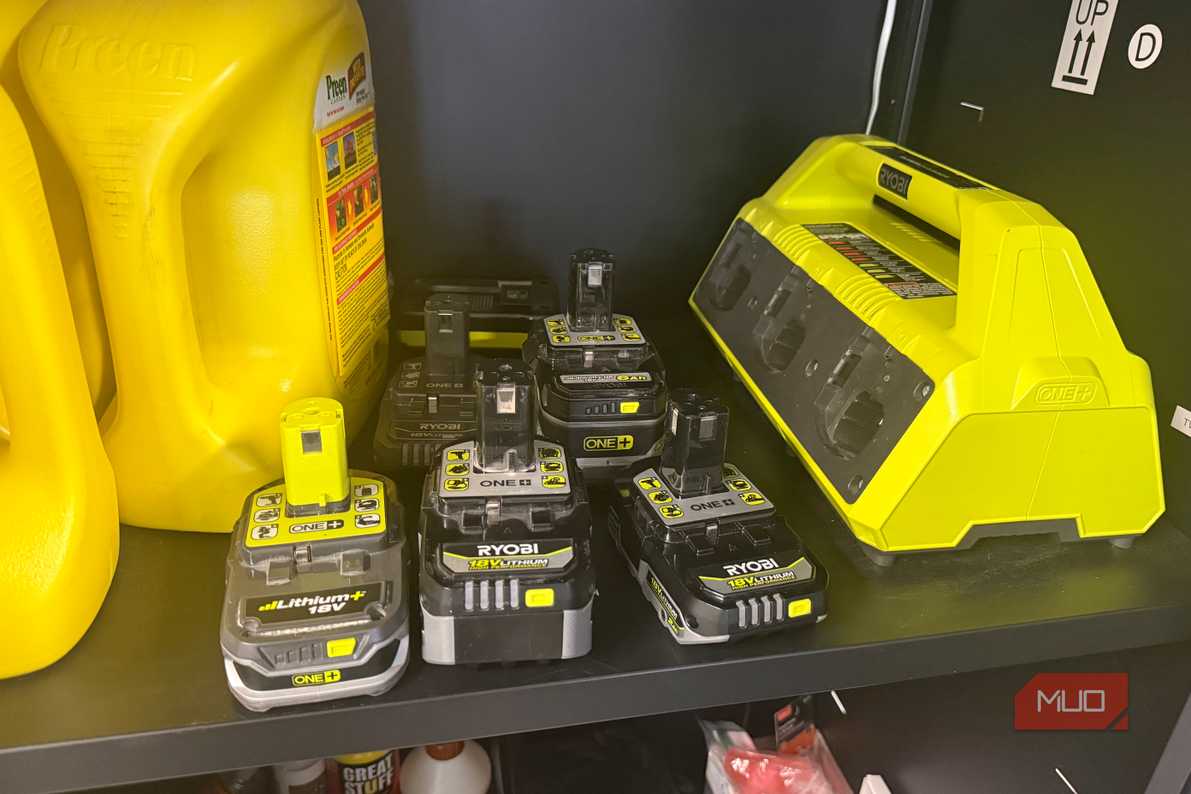
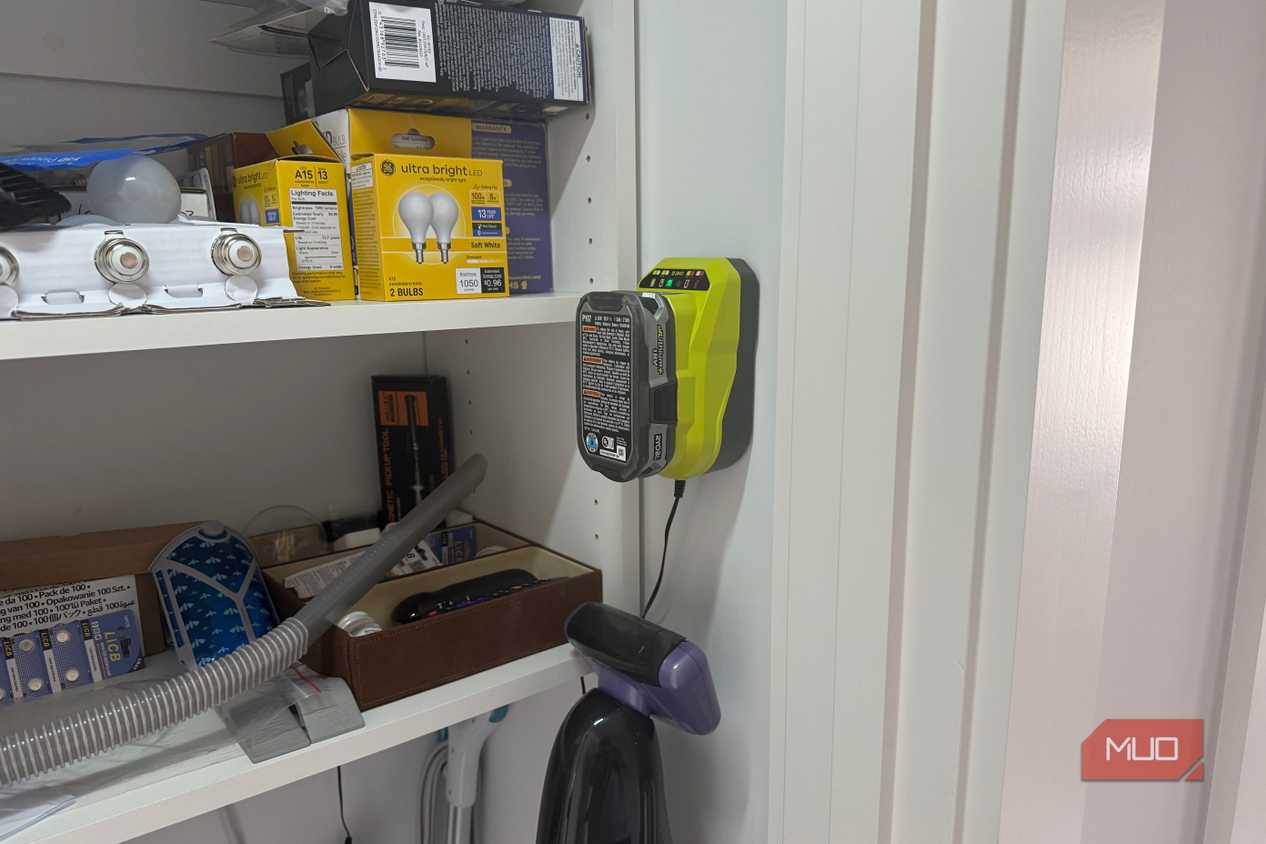
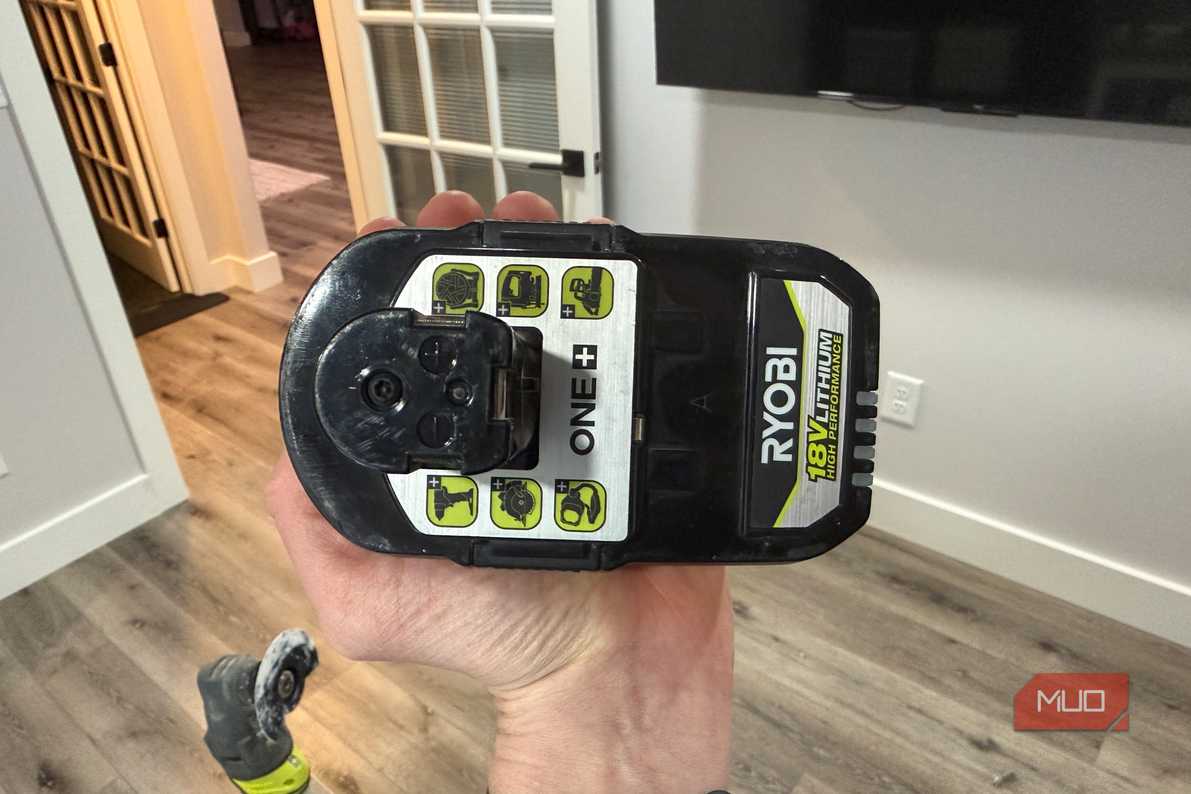
Not one of my 1.5Ah or 2.0Ah packs was a decision. They came bundled with tools the way a phone comes with a cable, and I've never walked into Home Depot intending to buy one. That's the correct way to acquire them.
Compacts earn their keep on tools that sip. A drill boring pilot holes, an LED work light, a caulk gun, a tire inflator: none of these holds a motor under load long enough to care what's clipped to the bottom. Most of the cheap ONE+ tools I reach for weekly live in that category. What a compact buys you is balance. Ryobi's 4.0Ah pack weighs about 1.6 pounds, roughly double a compact, and you feel every ounce of that when the tool is over your head.
The ceiling shows up the second the draw turns serious. Ask a compact to feed a circular saw and it sags, then quits well before the cut list does. Nothing is broken. A compact is a single row of five cells, and there's a hard limit on what five cells can hand over. Keep every one that lands in your garage. Buy none of them.
The standard 4.0Ah is the pack I'd skip
Ninety-nine dollars for the wrong four amp hours

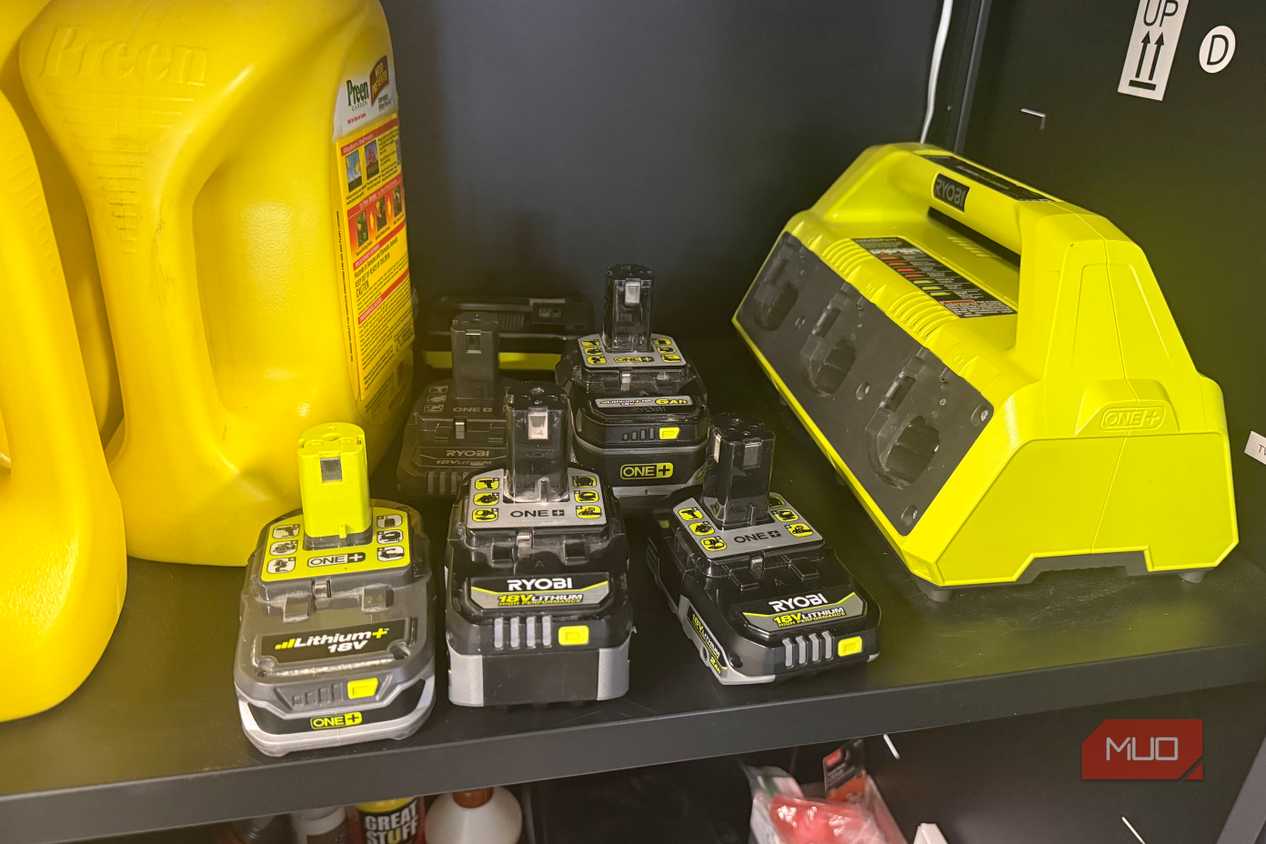
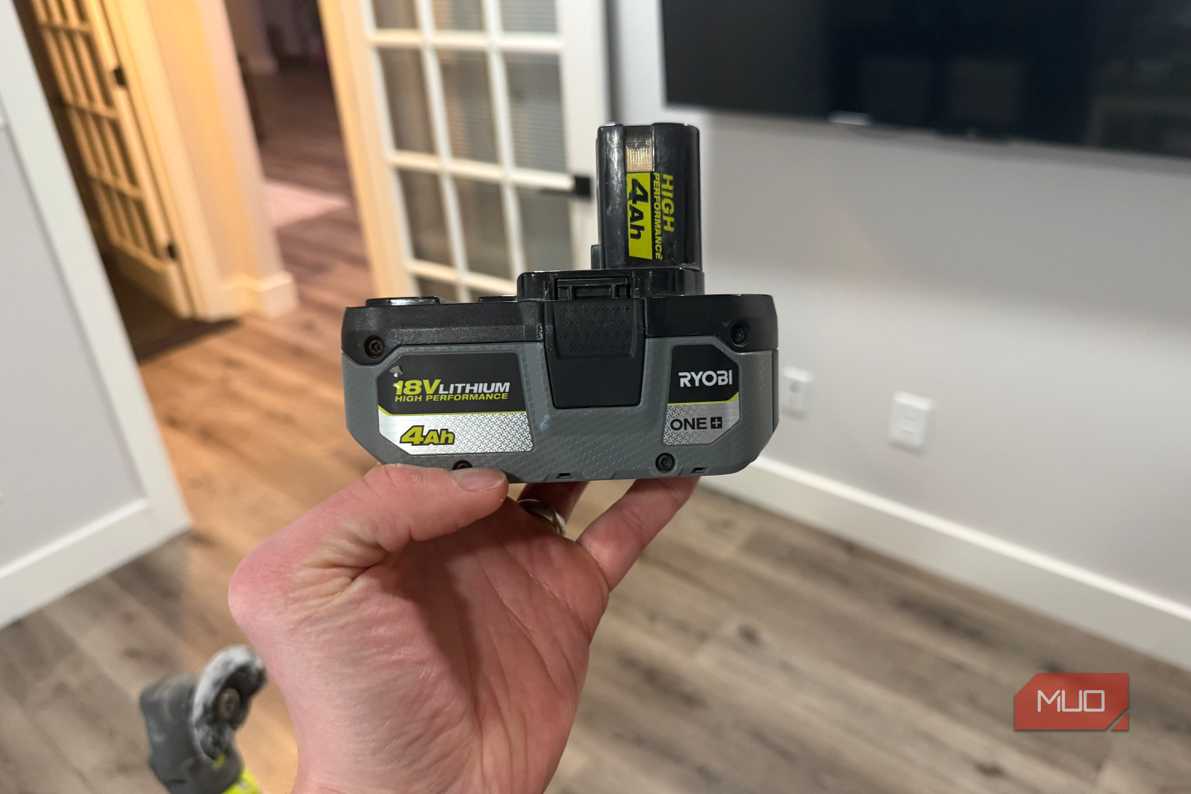
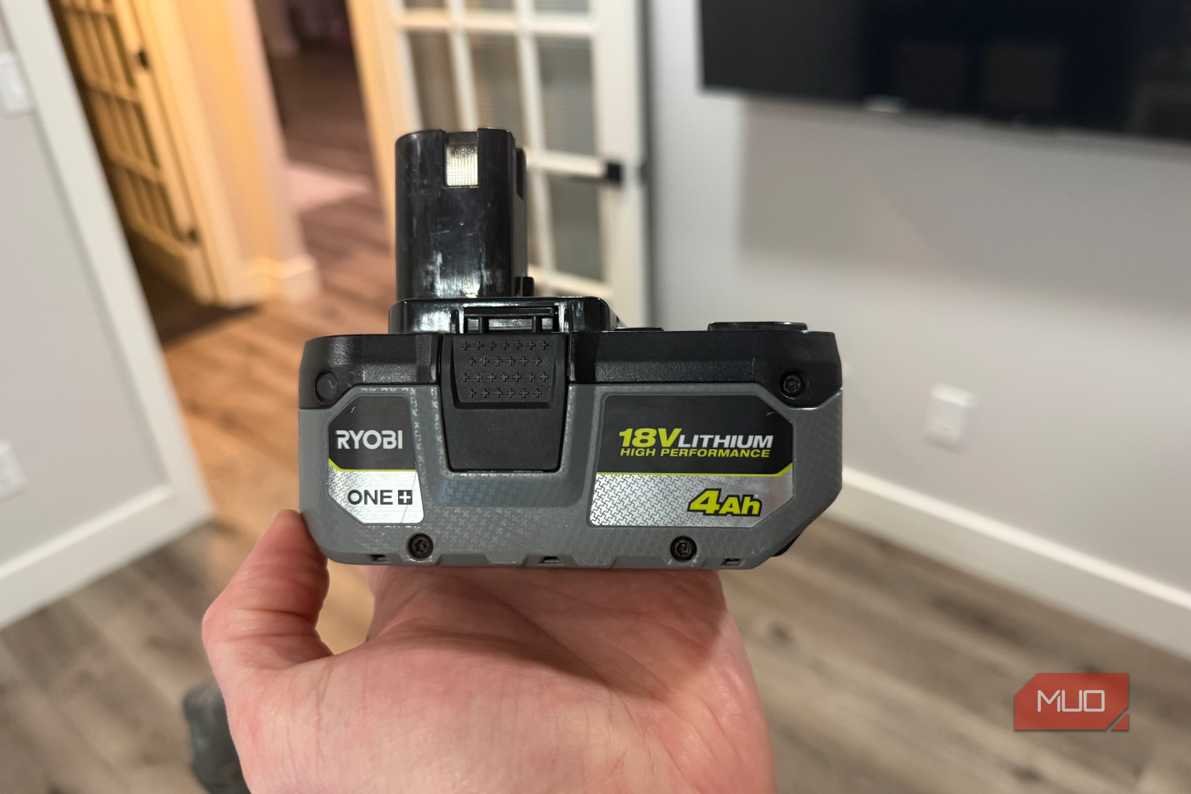
Ryobi sells two 4.0Ah batteries that hang inches apart on the same peg. The green one, the PBP005, lists at $99. The teal one, the PBP004, lists at $129. That $30 looks like a rounding error until you learn what it buys.
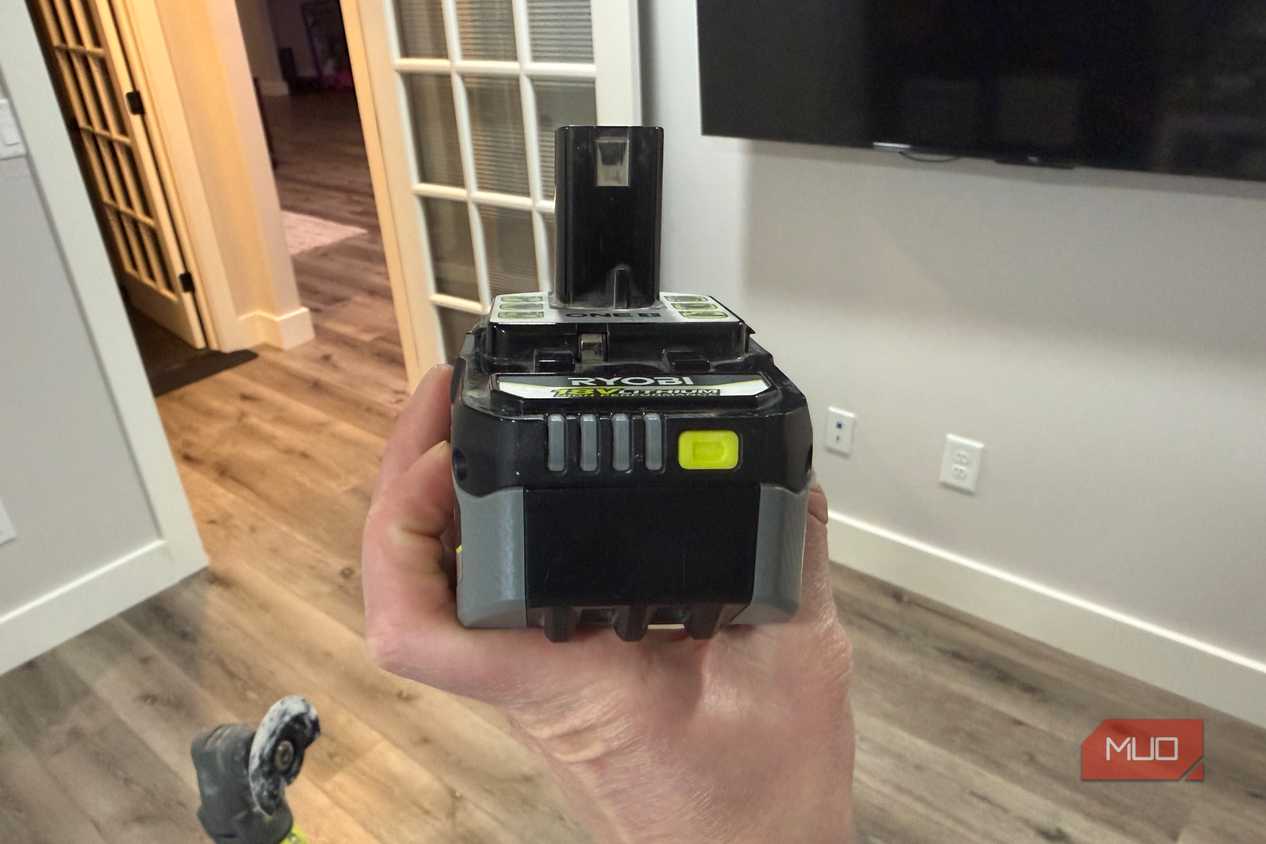
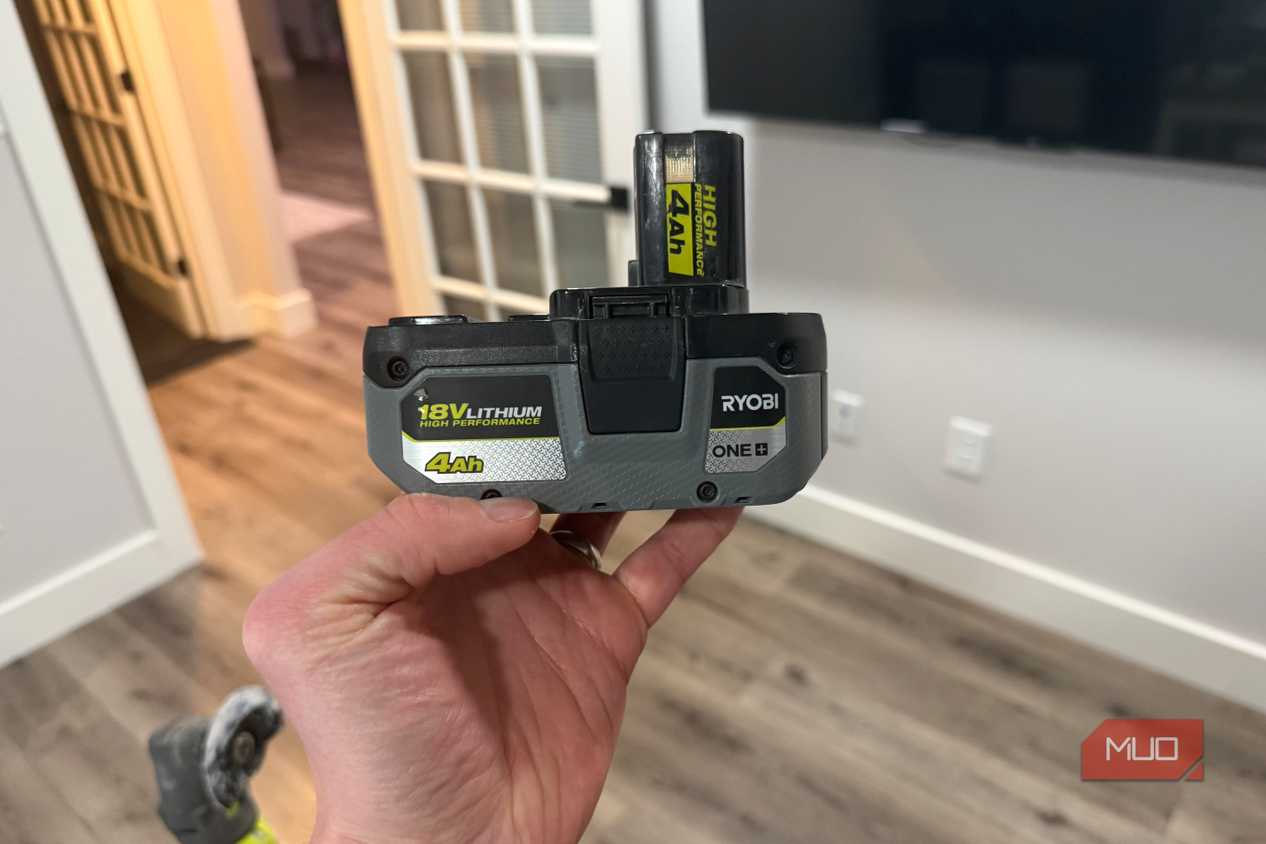
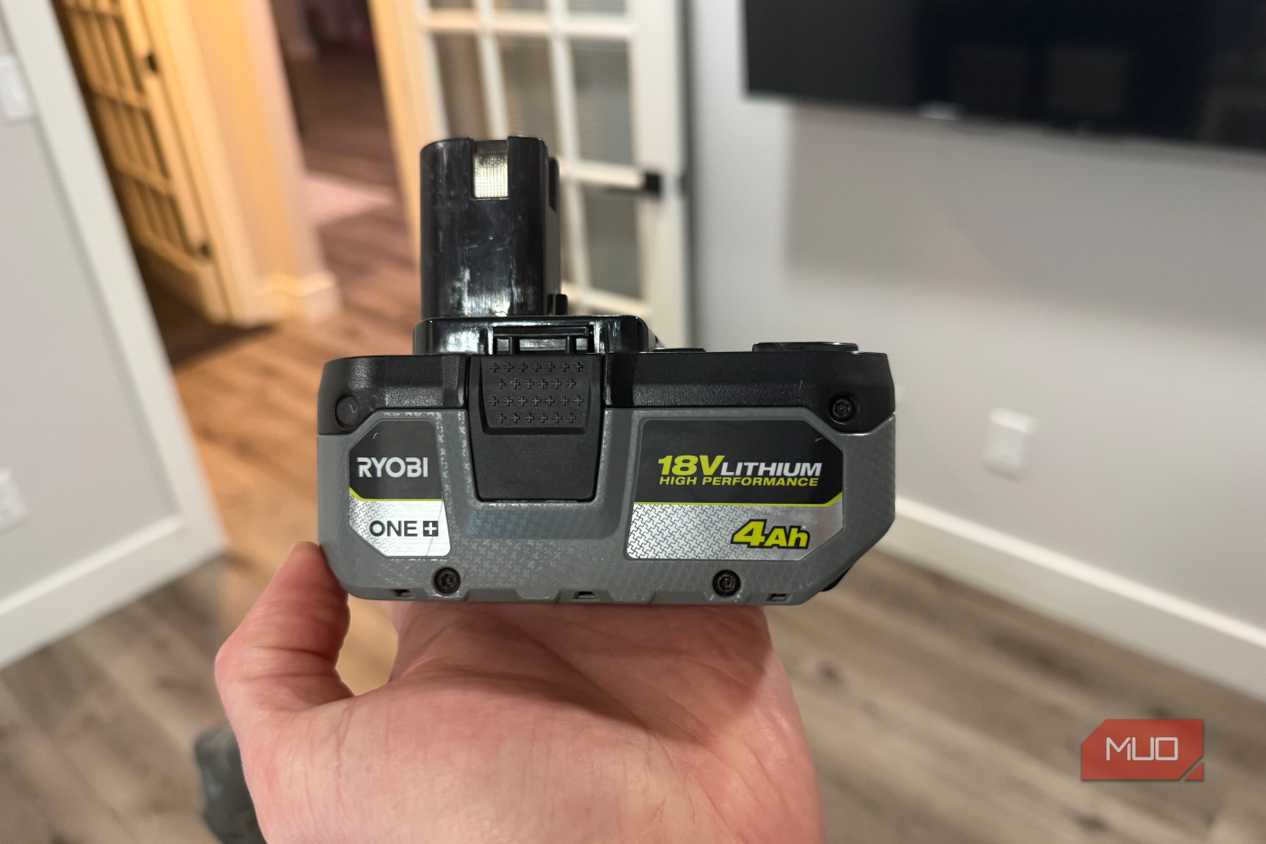
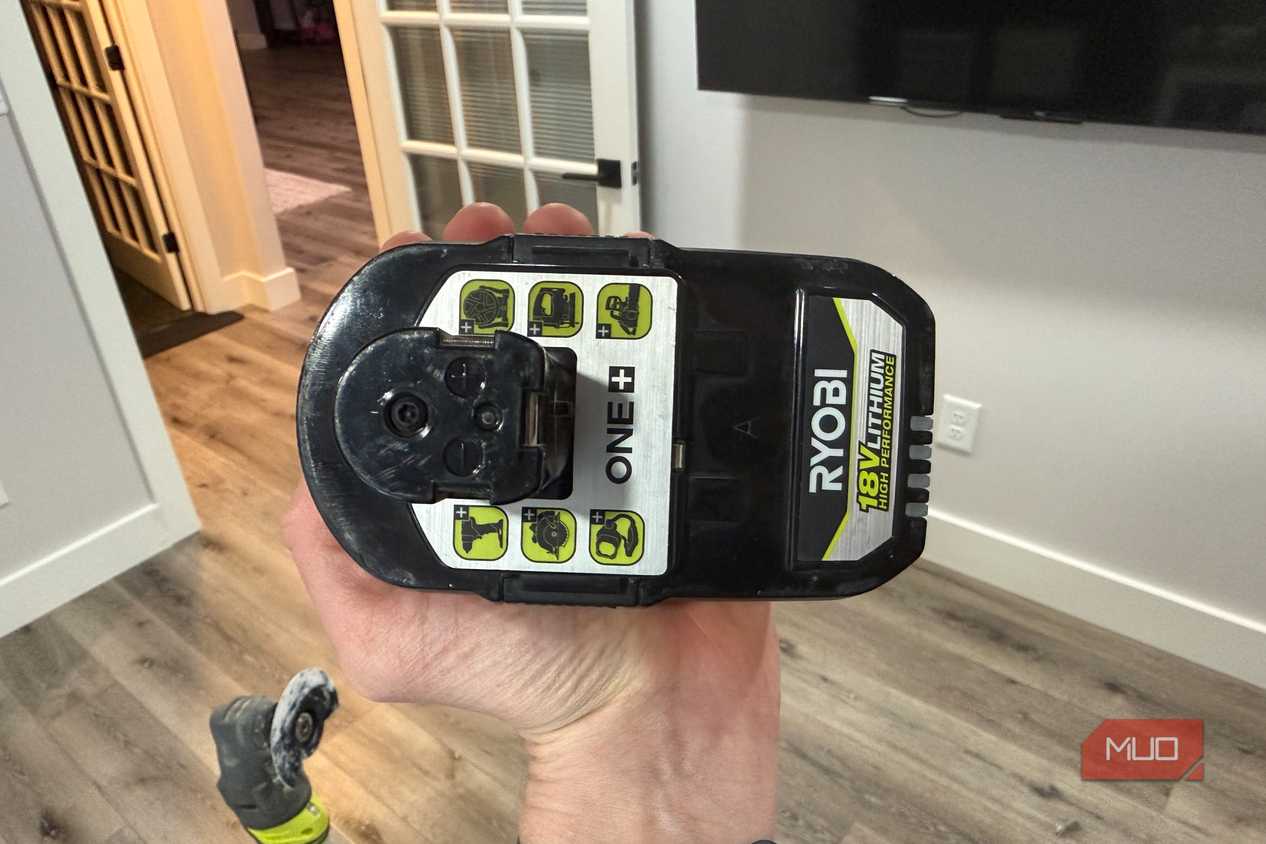
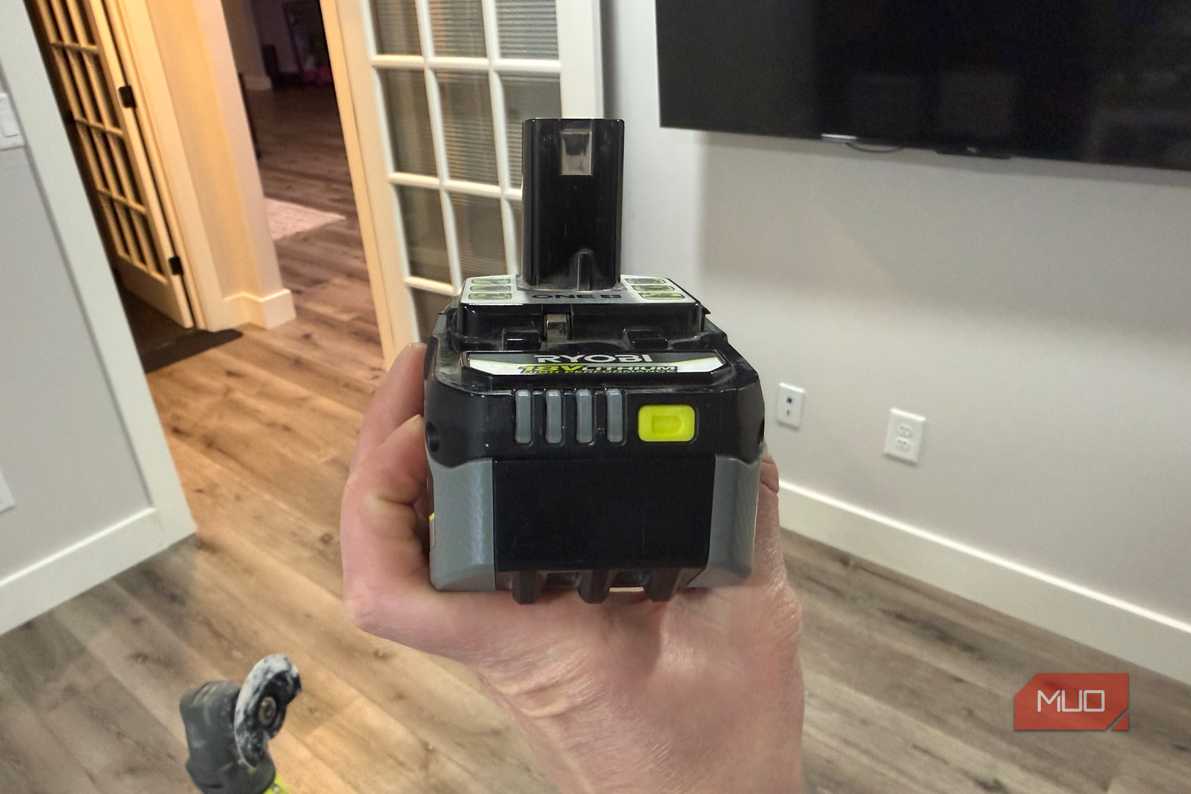
Teal means IntelliCell, Ryobi's name for the electronics and higher-output cells that let a pack talk to a brushless tool and hand over roughly 30% more power. Ryobi's own testing puts a number on the gap. Cutting two stacked sheets of 3/4-inch OSB with its compact brushless circular saw, the standard 4.0Ah took 19.4 seconds. The High Performance version did it in 16.2. Same capacity, same footprint. The gap is a little over three seconds.
Then the arithmetic turns ugly. The green pack works out to $24.75 per amp hour. The 6.0Ah High Performance battery lists at $159 and keeps falling to $99, which is $16.50 per amp hour for half again the capacity and better cells underneath. I own a green 4.0Ah. It's the only battery on my shelf I'd take back.
High Performance is where my money goes now
Thirty percent more power, but only at sale price



 Credit: Jonathon Jachura / MUO
 Credit: Jonathon Jachura / MUO
 Credit: Jonathon Jachura / MUO
 Credit: Jonathon Jachura / MUO
 Credit: Jonathon Jachura / MUO
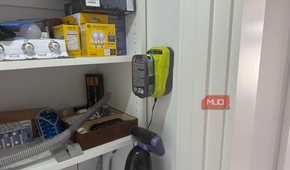
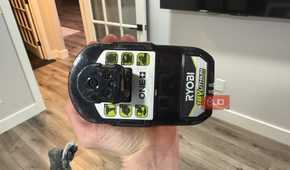
High Performance packs are the only Ryobi product I'll wait months to buy. The list price on them is theater. The 4.0Ah PBP004 goes for $129 and routinely drops to $49–$70. A two-pack of 6.0Ah PBP007s has landed as low as $108, which puts each battery around $54. Home Depot cycles these prices constantly, so paying the tag is mostly a tax on impatience.
What the sale price buys is a pack that pays off twice over. In an HP brushless tool, the electronics let the motor pull harder and the work goes faster. In the brushed tools that make up most of my collection, the electronics sit idle and the extra capacity does all the work, which means fewer walks back to the charger. Neither payoff depends on the tool being new. My earliest ONE+ tools take the newest packs without complaint, and that backward reach is the real reason the platform holds together. Ryobi sells 8.0Ah and 12.0Ah High Performance packs too, and I've never been tempted. Past 6.0Ah, the weight starts undoing whatever the runtime gains on anything you hold rather than push.
The Edge packs I stopped buying
Tabless cells are real, and so is the sticker

Everything above lives on my shelf. Some Edge packs do to, but they're not my go-to batteries and the reason is arithmetic rather than doubt.
Edge is Ryobi's tabless design, built around larger 21700 cells with laser-welded straps and heat sinks the company markets as Cool-Core Pro. Tabless connections cut internal resistance, so the pack pushes more current without cooking itself. The claim survives the bench. On that same OSB cut, the 4.0Ah Edge finished in 12.0 seconds against 12.5 for the 8.0Ah High Performance pack. It beat a battery with twice the capacity while carrying half the weight.
The sticker is where I get off. The 4.0Ah Edge holds at $129. Ryobi added an 8.0Ah at $229 and a 12.0Ah at $269 in May 2026, and getting the advertised charge speed out of either one means buying the PCG007 charger separately. A 6.0Ah High Performance pack keeps landing near $54. Edge is built for tools that pull hard and never let up, and on my property that work already moved to 40V. Four cheap packs beat one fast one in a garage like mine.

Ryobi ONE+ 18V Battery
- Battery Type(s)
- Lithium-Ion
- What's Included
- 2 Batteries
What I'd actually put in the cart
The ladder is short. Keep the compacts that arrive free and run them on tools that sip, but never spend a dollar on one. Walk past the green 4.0Ah, because the teal packs match its price most weeks and beat it in every other way. Buy High Performance on sale, and let the sale come to you. Leave Edge on the peg until its price starts behaving like the rest of the shelf does. None of this took more than a calculator. That's the strange part about Ryobi: the tools are where the fun is, but the packs are the only place worth being difficult.